Inside the question engineOpen the field notes
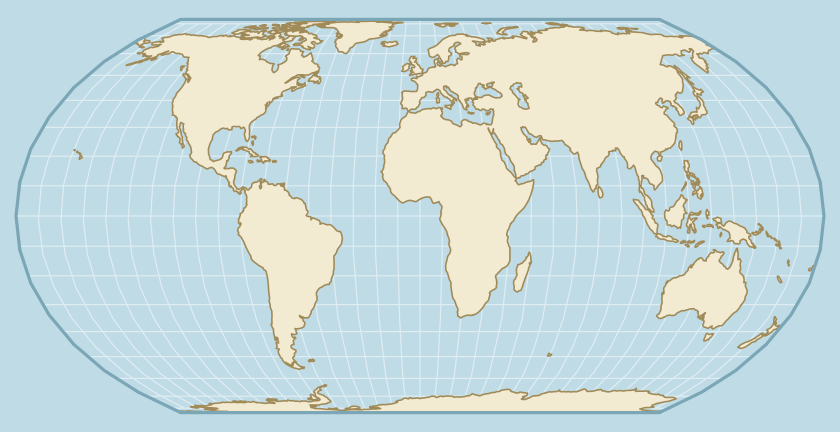
The body of water and the land use the same scale and an equal-area projection. Their outlines therefore retain the true area ratio. The difference between the answers becomes smaller at each stage.
The ocean and land quiz: how it works
This quiz sets an ocean or sea against a continent or a large island at the same scale. Your task is to pick the larger area. The outlines are drawn in an equal-area projection, so they keep their true proportions.
How does the quiz set water against land?
Each round has 10 questions. The water side has 11 bodies of water (oceans and seas), and the land side 11 areas (continents and large islands). The area gap between the answers shrinks at each stage: from 50% to 150% in the first questions to only 2% to 8% in the last ones.
Where do the areas of oceans and land come from?
Areas come from the source assigned to each area: Encyclopaedia Britannica, NOAA and Geoscience Australia (published 2024). Outlines come from Natural Earth data.
A fact: the Pacific against the continents
The Pacific Ocean covers 165.3 million km², more than all seven continents combined (148.9 million km² according to the same sources).
Frequently asked questions
Which ocean is the smallest, and how does it compare with the Pacific?
Pacific Ocean: 165.3 million km². Arctic Ocean, the smallest in the quiz: 15.6 million km², or about 9% of the Pacific's area.
Why are Greenland, Madagascar, Borneo and New Guinea in the quiz if they are not continents?
The land side holds 7 continents and 4 large islands: Greenland (2,166,000 km²), Madagascar (587,000 km²), Borneo (748,200 km²) and New Guinea (785,800 km²). They keep the comparisons from being limited to continents.
Is Antarctica larger than Europe?
Yes. Antarctica: 14.2 million km², Europe: 10.0 million km², so Antarctica is about 42% larger.